Price per thousand is the default comparison in napkin purchasing, yet it rarely reflects what happens at the table. This analysis looks at the Custom Airlaid Paper Napkin through cost per service, using published specifications and factory terms.
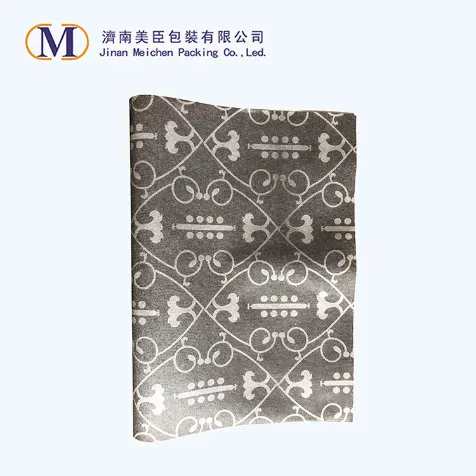
01Why unit price is the wrong benchmark
Napkins are commonly bought the way most purchasing departments do: request three quotes, pick the lowest price per thousand, move on. A week spent counting what a café throws away per shift changes that picture. A cheap 2-ply tissue napkin needs two or three sheets to deal with a coffee spill and a plate; an airlaid napkin does the same job in one. The "expensive" sheet works out cheaper per customer.
That is the frame that applies to the Custom Airlaid Paper Napkin at Jinan Meichen Packing. The product is described as a soft, cloth-like disposable that stays strong when wet, is highly absorbent and sanitary, and is more porous and fluffier than a normal wet napkin. Those properties are not marketing adjectives — they are the reason a single sheet replaces several.
The market is moving the same way. Industry data puts airlaid among the fastest-growing napkin materials at roughly 5.1% a year, and HoReCa — hotels, restaurants and catering — accounts for about 65.5% of airlaid napkin revenue. When the professional channel is the one paying, cost per service matters more than shelf price.
02The specifications behind the cost
Below is what is actually on the specification sheet, with the cost implication of each line. A number without a use case tends to mislead.
| Specification | Published value | Cost-per-service implication |
|---|---|---|
| Size | 400 × 400 mm or custom | A dinner-sized sheet; one covers a lap and still wipes a table |
| Grammage | 50–70 g | The main cost lever: 50 g for coffee, 60–70 g for dinner service |
| Folding | 1/4, 1/8, 1/16 or special | Quarter fold suits dispensers; eighth fold suits cocktail and bar use |
| Plies | 1 ply | Airlaid density does the work extra tissue plies normally do |
| Material | 100% virgin wood pulp, mixed pulp cloth-like paper | Consistent absorbency, no short-fibre surprises between batches |
| Packing | 50 pcs/bag × 20 bags/carton (1,000 pcs) | Straightforward outlet allocation; custom packing available |
| OEM / ODM | Yes | Custom logo, fold and carton marking |
| Payment | 30% deposit, 70% before shipment | Cash flow planned around final inspection and balance |
| Lead time | Samples 5–7 working days; delivery within 4–6 weeks | Short enough for a seasonal campaign if ordered early |
Two details deserve attention. The sheet is one ply, which surprises buyers who assume more plies mean better quality; in airlaid, the nonwoven structure supplies wet strength, so extra plies raise cost without adding much function. The 400 × 400 mm format is already at the large end for a dinner napkin — going bigger is justified only when a client needs a lap-sized hotel presentation.
03Grammage and folds: where the money goes
When a buyer asks how to save money on a Custom Airlaid Paper Napkin order, the first question is what the napkin has to survive. A coffee-serve napkin sees a cup and perhaps a biscuit; a buffet napkin sees a full plate and a sticky finger. These are not the same product, and paying for 70 g in a coffee bar is as wasteful as putting 50 g in a steakhouse.
A practical allocation looks like this:
- 50 g: quick-service counters, coffee shops, bar snack service, hospital and office restrooms.
- 60 g: casual dining, airline catering, normal buffet lines — the all-round volume grade.
- 70 g: hotel breakfast, wedding tables, banqueting and anywhere the guest judges by touch.
Fold choice is the quieter cost item. Quarter fold runs fastest through automatic dispensers and retail packs. Eighth and sixteenth folds look more formal and are common in cocktail and dinner settings, but they take more handling at the converter. On a 200,000-piece order, that handling difference is worth discussing before the price is fixed.
Choose the lowest grammage that still gets the job done in one sheet. The saving is real, but not at the cost of a guest asking for a second napkin.
04Does custom printing pay for itself?
Printed napkins grow faster than plain stock, roughly 3.9% a year against about 2.9% for non-printed, according to market data. A printed Custom Airlaid Paper Napkin gives a café, hotel or caterer a brand touchpoint that costs a few cents and sits in front of the customer for the whole meal.
Jinan Meichen Packing uses uncontaminated water-based ink and advanced flexible printing technology, and can develop samples for independent designs. This matters for two reasons: water-based ink keeps the napkin acceptable for food-contact use, and in-house sample development means the printed sheet can be held in hand before committing to a container.
Printing is judged on a simple test. If the logo survives the fold and stays legible when the sheet is damp, it is doing marketing work. If the ink smears or the design disappears in an eighth fold, the napkin is better left plain and the budget moved into a higher grammage. Options such as printed airlaid paper napkins and colored paper napkins are worth comparing before a design is settled.
05MOQ, stock and the real entry cost
This is where a cost-effective decision can quietly become an expensive one. Published minimums are 50,000 pieces when stock paper is available and 200,000 pieces when it is not. For a single restaurant those figures look enormous; for a distributor supplying fifty outlets, they are a normal weekly-to-monthly volume.
| Order situation | Minimum | Recommended approach |
|---|---|---|
| Stock paper available | 50,000 pieces | Good for a first trial or a seasonal promotion |
| Custom paper / non-stock | 200,000 pieces | Share the container with other SKUs or a partner importer |
| Standard carton | 1,000 pieces per carton | 50 bags of 50 makes outlet allocation simple |
| Samples | Free, freight collected | Test the actual grammage and fold before ordering |
Free samples with freight collected is a sensible arrangement. Three samples — one plain, one printed, one at the highest grammage under consideration — should go through the same dispenser and the same spill test used in the outlet. Samples are ready within about 5 to 7 working days, fast enough that there is no excuse for skipping this step.
06Raw material swings and supply stability
Pulp pricing is never still. Industry commentary has tracked double-component polyester fibre for airlaid structures rising about 12% to USD 2.10 per kg in Asia, a move that compresses margins for converters buying on the spot market. For a buyer, the risk is not the price increase alone — it is a supplier quietly changing grammage or fibre mix to hold the old price.
Jinan Meichen Packing has held an ISO9001:2015 certificate for twelve years and states that quality control runs from raw material to shipment. The factory also operates automated bottom-sealed sack machines, computerized hot-cutting and hot-sealing bag-making machines, and die-cutting machines, and sells into Hong Kong, the USA, Japan, the UK and Singapore. A factory with that export mix has an incentive to keep batch behaviour consistent, because customers reorder on specification rather than on price alone.
Ask for the grammage tolerance in writing and keep a retained sample from the first production lot. If a later shipment differs, there is something physical to compare against — a habit that saves more money than most price discussions.
07Ordering from Jinan Meichen Packing
Some background explains why the terms are structured as they are. Jinan Meichen Packing Co., Ltd. is based in Jinan, Shandong Province, and covers about 20,000 square metres. The company produces disposable paper products including air sickness bags, food packaging bags, paper toilet seat covers, hospital bedsheets, paper cups, paper tableware, colorized napkins and air-laid paper. Most output goes to Hong Kong, the USA, Japan, the UK and Singapore.
For the napkin programme specifically, OEM and ODM service is available, packing can be customized, and the standard arrangement is a 30% deposit with the balance before shipment. Delivery is normally within four to six weeks. The airlaid paper napkin category and the airlaid napkins product page are useful starting points before sending an inquiry.
A reliable sequence: request the free samples, specify the grammage and fold, confirm the printed proof, then lock the price against a defined carton quantity. It is slower than picking the cheapest quote and considerably more dependable.
08Where airlaid fits — and where it doesn't
Keeping the assessment balanced, there are orders where airlaid is the right answer and others where it is not.
Good fit
- HoReCa service where one sheet replaces several
- Brand programmes needing a low-cost printed touchpoint
- Buffet, banquet and hotel breakfast presentation
- Buyers consolidating a container across disposable lines
Poor fit
- Pure price tenders judged only per thousand sheets
- Runs below the 50,000-piece stock minimum
- Heavy wet or oily service needing a stronger wipe
- Photographic gradients on a porous printed sheet
09Frequently asked questions
Are Custom Airlaid Paper Napkins more expensive than ordinary paper napkins?
What grammage and size should be ordered for a restaurant?
What is the MOQ for a Custom Airlaid Paper Napkin order?
Does printed branding on airlaid napkins actually pay for itself?
How long does production and delivery take?
Is a Custom Airlaid Paper Napkin an eco-friendly choice?
10Verdict on cost-effectiveness
Are Custom Airlaid Paper Napkins cost-effective? Yes when they are bought for the job they do, and no when they are treated as a cheaper-looking alternative to tissue. A 50–70 g, 400 × 400 mm one-ply sheet made from virgin wood pulp replaces multiple ordinary napkins, removes laundry from a cloth programme, and carries a printed logo at very little extra cost once container volumes are reached.
The catch is the entry quantity: 50,000 pieces with stock paper, 200,000 without. Plan the volume, choose the lowest grammage that still works in one sheet, and hold a retained sample from the first lot. On those terms the Custom Airlaid Paper Napkin stops being a premium indulgence and behaves like a sensible operating cost.